
Pendant lights over the kitchen island are the one lighting decision everyone in the house sees every day — and the one most people second-guess. How high should they hang? How many do you need? How bright is bright enough? This guide answers all of it with the same numbers we give our own customers, so you can plan the whole installation before you order a single light.
The short version:
- Height: hang shades 750–900 mm above the benchtop
- How many: odd numbers look best — three suits most islands over 1.2 m
- Spacing: 600–800 mm between shades, so the pools of light overlap at bench level
- Brightness: about 800–1,000 lumens per pendant, in warm white (2200–2700 K)
- Lamping: standard E27 globes on 230 V/50 Hz mains, installed by a licensed electrician
How high should pendant lights hang above a kitchen island?
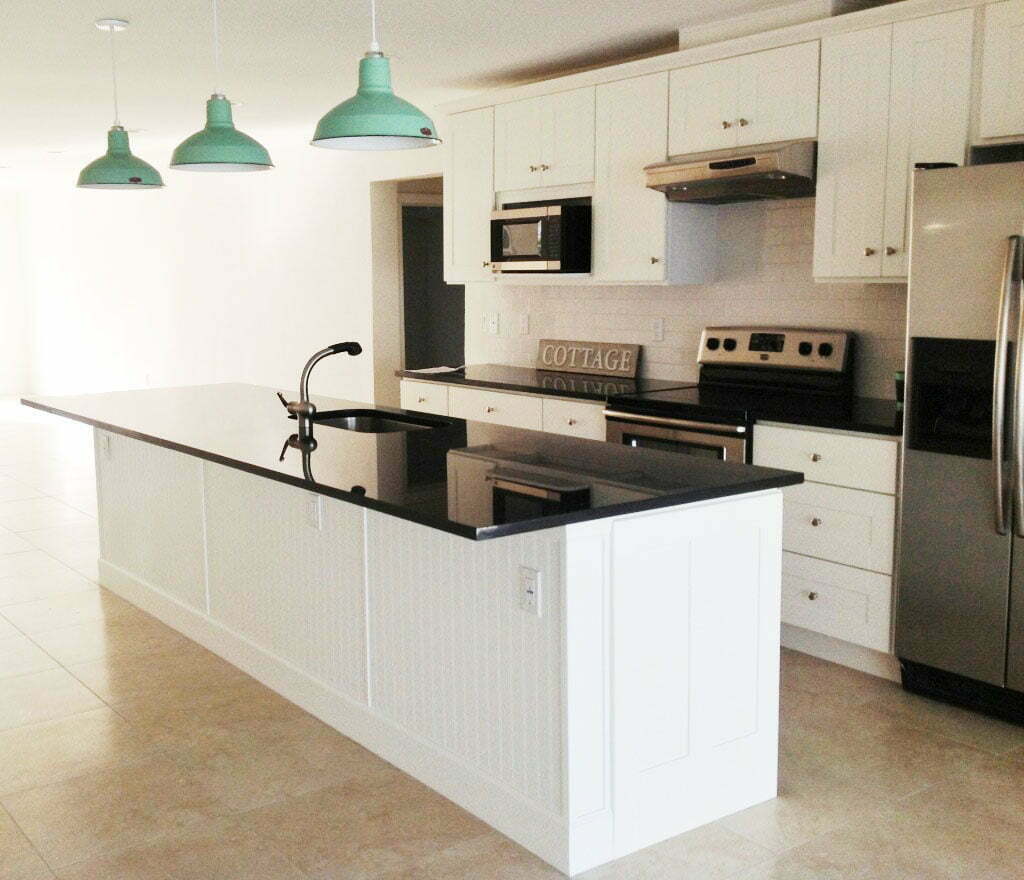
Start at 750–900 mm between the underside of the shade and the benchtop, then fine-tune for your ceiling height and sight lines. That band puts the shade below eye level when you’re standing at the bench — so the globe never glares at you — while keeping it high enough that it doesn’t block faces across the island.
Within that range, hang toward the lower end for a moodier, more intimate feel, and toward the higher end when the island is first and foremost a workspace — task lighting wants spread, while dining lighting wants intimacy. If your ceilings run past 2.7 m, resist the urge to split the difference and hang the pendants halfway up the room: keep the shade in the 750–900 mm band above the bench and let the longer drop become part of the look.
One measurement worry you can cross off the list: our cord and chain pendants are supplied with a generous drop that your electrician trims or loops to the final height during installation, so you don’t need to commit to an exact figure before you order.
How many pendants — and how far apart?
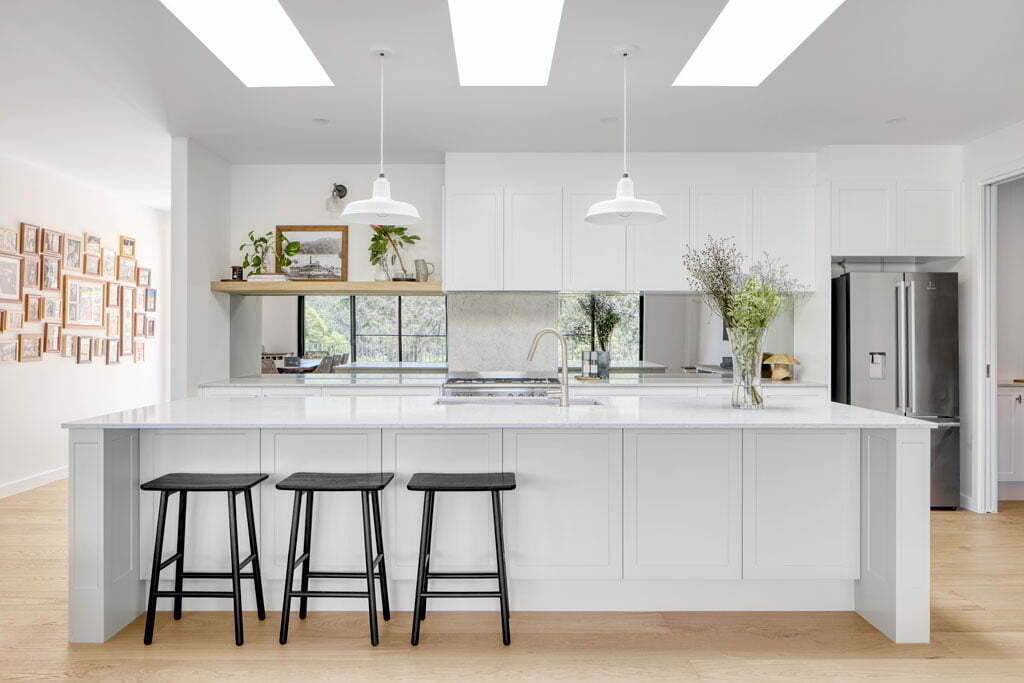
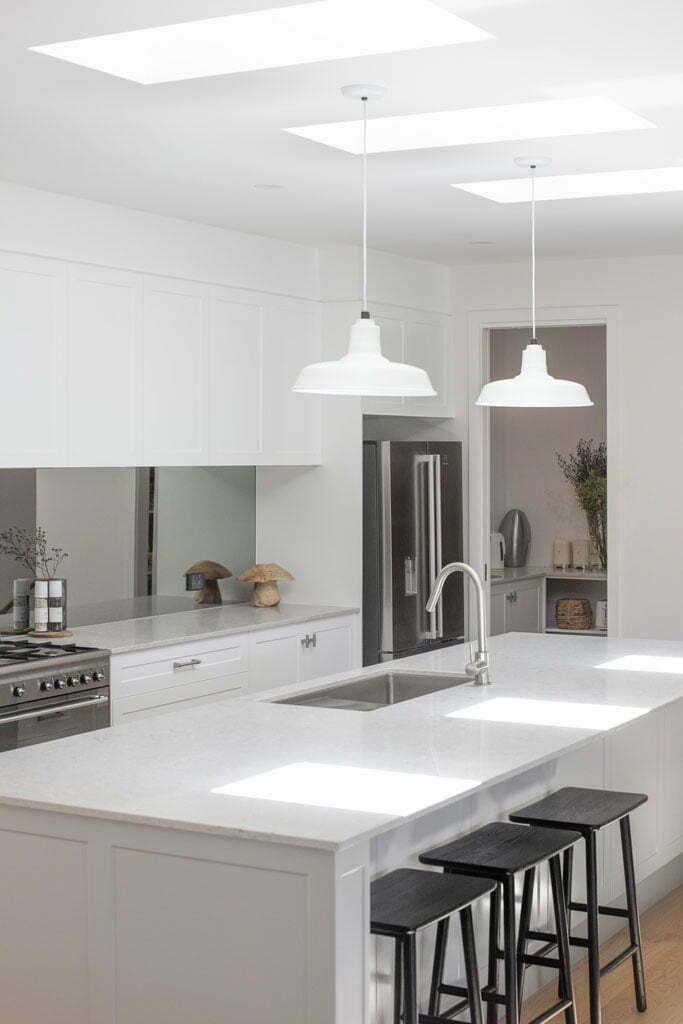
Odd numbers read better than even ones. A row of three draws the eye to the centre of the island, where a row of two can leave the middle looking dark. For islands longer than about 1.2 m, three evenly spaced pendants is the answer in most homes; a compact island or a bench return carries two comfortably, and a small island often looks best with a single larger shade as a feature.
For spacing, allow 600–800 mm between shades. Place the middle pendant over the centre of the island first, then space the others evenly toward each end, keeping the end shades well inside the ends of the bench so light lands on the work surface rather than spilling onto the floor. The test that matters happens at bench level: the pools of light should overlap, with no dark stripe between them.
And centre the row on the island itself — not on the kitchen, and not on the ceiling. The island is the anchor everyone reads, and even a 50 mm offset shows.
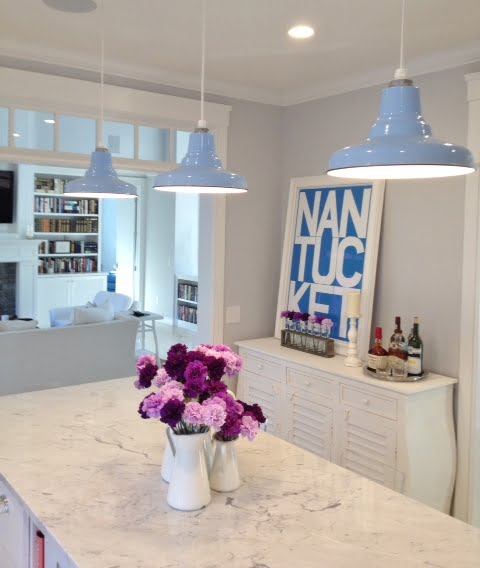
What size shade suits a kitchen island?
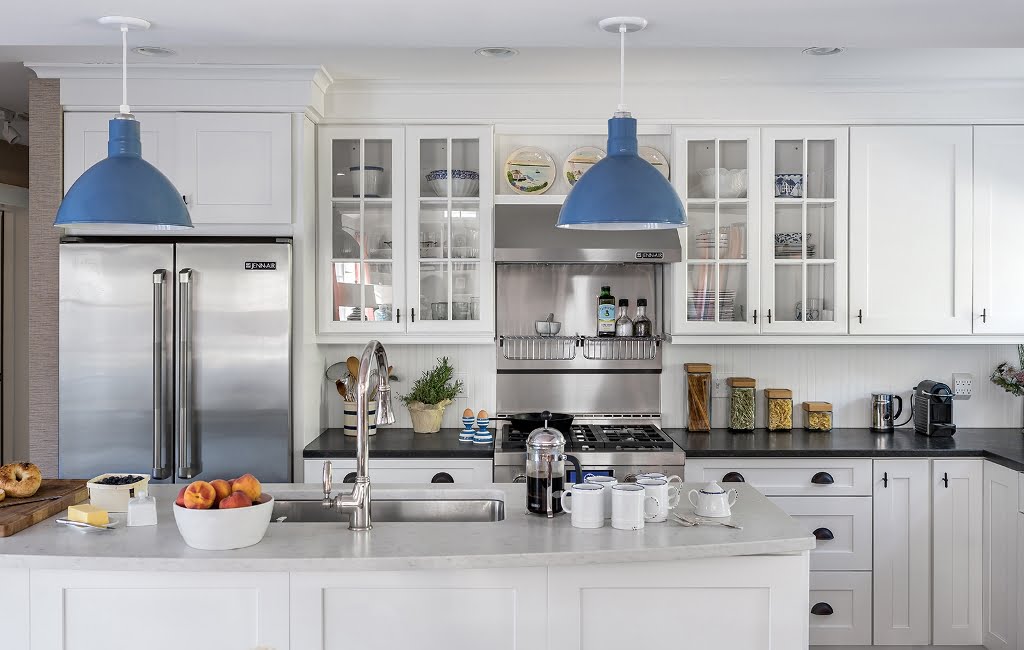
The number in every Barn Light product name is the shade diameter in centimetres, which makes comparing sizes easy. As a guide: smaller shades (roughly 30–35 cm) suit a row of two or three over a typical island, while larger shades (40 cm and up) work as a single statement piece, or in rows over long islands in rooms with the scale to match — the Havendeen project below runs 40 cm Originals over a generous island, and it works because the whole room carries that scale.
Two checks before you commit: the shade should never be wider than the bench beneath it, and remember you’ll see the pendants side-on from across the room far more often than you’ll stand directly under them. Too small and the pendants get lost; too big and the space feels crowded.
Then there’s the old trick that’s never failed us: cut cardboard circles at the diameters you’re considering and hold them up in place over the island. Thirty seconds with scissors beats weeks of squinting at product photos.
Think in lumens, not watts
Here’s the part that saves you from the most common globe-buying mistake. In Australia, lumens are the standard measure of light output; watts only measure power draw — the wattage on the box tells you what the globe costs to run, not how bright it is.
The old shorthand of “a 60 W globe for the kitchen” comes from the incandescent era, when power draw and brightness moved together. LED broke that link for good: a modern LED delivering around 800 lumens — about what the old 60 W incandescent gave you — draws only 8–10 W, and two LED globes with identical wattage can differ noticeably in output. The lumen figure on the packet is the only number worth comparing.
Over a kitchen island, 800–1,000 lumens per pendant is usually plenty. Deep-bowl shades concentrate light downward onto the bench, so less output goes further than you’d guess — a row of three pendants at 800 lumens each gives you a genuinely bright work surface. Choose warm white (2200–2700 K); a filament-style LED reads as traditional incandescent warmth under a powder-coated shade.
If you want dimming — and over an island it’s worth it — two parts have to agree: a globe marked dimmable, and an LED-compatible dimmer module your electrician can confirm or swap in minutes. And take Melinda’s advice above: put the pendants on their own switch, separate from the downlights.
Cord, chain or stem — which suspension suits your island?
Every suspension type takes the same Australian-made shades in the same colours; what changes is the line it draws and how it behaves.
Cord pendants hang the shade from its own cable — the cleanest, most minimal look, and the natural pick for modern kitchens. Browse the industrial barn pendant lights collection for the classic deep-bowl cord styles.
Chain-hung pendants carry the weight on chunky 4.8 mm aluminium chain with the cable woven through the links — more industrial character, and a practical bonus: the chain can be re-hooked to change the drop or move the light to another hook without an electrician, handy when the kitchen table becomes the party table.
Stem pendants fix the shade on a rigid pipe — no movement at all, a slightly more engineered look, and the right call for lower ceilings where a swinging shade would be in the way.
If you’re seating people at the island — bar stools along one side — glare control matters more than anywhere else in the house. A deep-bowl shade like the Wesco keeps the globe hidden from seated eye level, so nobody spends dinner staring into a filament. You can compare every suspension type side by side in our pendant lights range.
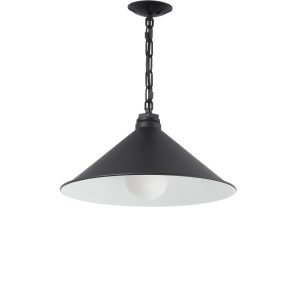
A few favourites for kitchen islands:
-

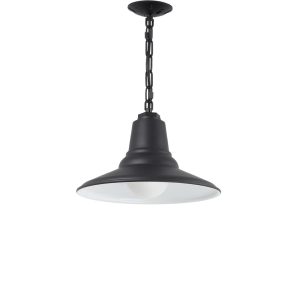
The Hobart Chain Hung Pendant
From: $245.00 AUD Customise & Buy -
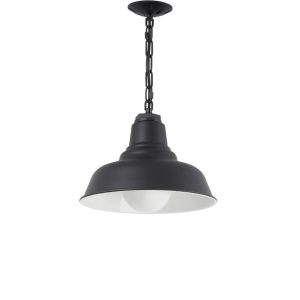
The Astro Chain Hung Pendant Light
From: $223.00 AUD Customise & Buy -
The Universal Chain Hung Pendant
From: $255.00 AUD Customise & Buy This product has multiple variants. The options may be chosen on the product page -
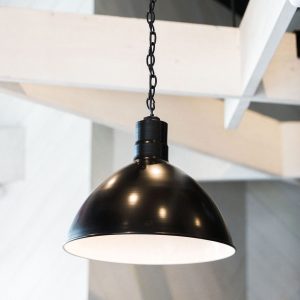
The Wesco Chain Hung Pendant
From: $223.00 AUD Customise & Buy This product has multiple variants. The options may be chosen on the product page
Style and colour: make it yours
Every Barn Light pendant is powder-coated to order in our Carrum Downs workshop, so the colour is a decision, not a compromise. Matching the Colorbond palette ties the kitchen into the rest of the build; a two-tone shade with a contrasting interior adds depth you only notice up close, which is exactly where island pendants live. Popular plays: match the shade to your tapware or cabinet handles, pick up the splashback colour, or run classic black or white and let the silhouette do the talking.
If you’re torn between two or three colours, order our powder-coated swatches first — they’re real coated metal, not printed cards, so what you see in your own kitchen light is exactly what arrives on the pendant.
Installation: the practical bits
Our pendants are hardwired 230 V/50 Hz fittings, and in Australia all fixed mains wiring must legally be carried out by a licensed electrician. For a sparkie it’s a routine job: each pendant hangs from a ceiling canopy wired to the lighting circuit, with the drop trimmed or looped to your final height on the day.
Lamping is standard E27 (Edison screw) — no proprietary drivers or transformers to fail down the track. When a globe eventually dies, you replace it yourself in seconds, and as LED technology keeps improving you can upgrade globes indefinitely while the powder-coated hardware carries on.
If you’re building or renovating, mark the canopy positions on the plans early — centred over the island, not the room — and decide the switching before the plaster goes up: pendants on their own switch, with a dimmer if you want the island to shift from prep station to dinner table at a turn.
The quick checklist
- Height: 750–900 mm from benchtop to the underside of the shade
- Count: three for islands over 1.2 m; odd numbers over even
- Spacing: 600–800 mm between shades, light pools overlapping at bench level
- Size: cardboard cut-outs held in place — thirty seconds, no regrets
- Globes: 800–1,000 lumens each, warm white 2200–2700 K, dimmable if you want it
- Switching: pendants on their own switch, separate from downlights
- Sparkie booked: hardwired 230 V/50 Hz, standard E27 lamping
Still weighing it up? Send us a photo of your island with a couple of measurements and we’ll tell you exactly what we’d hang over it — use the call-back form below and Melinda will ring you at a time that suits.